

Friends, I am excited about what is the first of many blogs that I am writing for you – activists – for those fighting for the animals in the Animal Advocacy Movement (AAM) – I want to help Keep You Engaged!
I am very interested in employee engagement - how and why all of you continue to do what you do every day and how I can support you in ensuring that you continue to do it for many years to come.
Engagement is a reciprocal. People work for organizations, and organizations are made up of people, and in the case of social justice organizations, those people are activists. And, the quality of an organization’s human resources is perhaps the leading indicator of the level of employee engagement. High quality human resources practices are correlated with high quality employee engagement, ultimately determinative of the quality of the organizations’ activism efforts.
How organizations treat their employees either strengthens the work of those organizations or puts the organizations at risk.
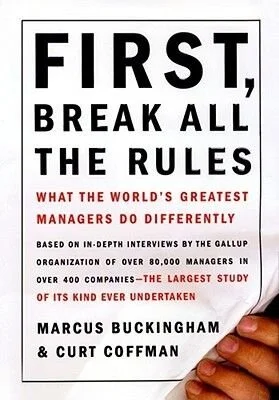
One of the most compelling bodies of work in this area was done by the Gallup Organization and popularized in the 2014 book, First, Break All The Rules: What the World’s Greatest Managers Do Differently, by Marcus Buckingham and Curt Coffman.
The Gallup Organization conducted in-depth interviews with over 80,000 managers in 400 companies, and according to Echols (2005), studied survey results from three million other employees. This led to the creation of a list of 12 of the most fundamental questions related to employee engagement, known as Q12. The Q12 were ultimately phrased as statements to which those surveyed were asked to respond affirmatively or negatively. When the responses were in the affirmative, they directly correlated with higher levels of employee engagement, and revealed “a directional relationship from employee engagement to outcomes such as employee retention” (Harter et al., 2020, p. 46). The 12 statements were laid out in Gallup’s Employee Engagement Hierarchy (Harter et al., 2000), structured into four hierarchical components—basic needs, management support, teamwork, and overall growth—loosely modelled after Maslow’s Hierarchy of Needs (Poston, 2009, p. 346).
In this blog I would like to help you feel strengthened, and will provide advice on employment matters that are shown to lead to higher levels of engagements. I will touch on everything from overtime to travel, from sexual harassment to shortened workweeks, and from performance management to confidentiality. When you feel respected and engaged, you are much better positioned to help animals.
I’d like to start by sharing a little bit about my own background, and how it uniquely positions me to help you.
I began my professional career in 1990, and proceeded to spend the following 23 years working in the area of human resources and employment. I began this journey working as national recruiter for the largest computer distributor in the world, Ingram Micro Inc., and was later promoted to a managerial position in human resources. I then joined a manufacturing organization, Kaufman Footwear, and was responsible for human resources across three plants in Canada and the United States. I was later drawn back to the fast paced world of technology where I served as the national director for one the first enterprise software consulting firms in North America, Atos Origin, and then I became the vice president of human resources for one of the largest software companies in the world, SAP. Growing tired of the non-stop global travel, I co-founded and was a partner of a law firm in Toronto specializing in employment and labour law and consulted for organizations across Canada and the United States for the next 10 years.

It was then, after facing and surviving a breast cancer diagnosis, that I knew I needed to finally leave the for-profit world, and turn all my time, energy, skills, and long time commitment to veganism, into fighting for farmed animals. I joined Mercy For Animals as their Vice President for Canada, and in over 5 years I oversaw more than a dozen undercover investigations from coast to coast, I was a federal lobbyist fighting for changes to the animal transportation regulations, and I worked with some of the largest corporations in the country.
I have been consulting for groups in the AAM since early 2018, particularly in the areas of human resources and organizational development. I hold 5 degrees and designations in the area of human resources including a master’s degree in Work, Organization and Leadership. I am currently working on my doctorate with a focus on the job experiences of women in the AAM.
I have also spent many years as a volunteer for several organizations including as the founding board member and president of Happily Ever Esther Farm Sanctuary, home of Esther the Wonder Pig for 6 years, I am an advisor to One Protest and Egg-Truth.
During my for-profit career, and my non-profit career I have dealt with every employment-related situation that you could imagine and I want to share that knowledge with you.
I want to help to empower you to be the best activist you can be. Please reach out with any questions and I’ll try to answer them in future blogs, anonymously of course!
Always for the Animals,
Krista
References:
Buckingham, M., & Coffman, C. (2014). First, break all the rules: What the world's greatest managers do differently. New York, NY: Simon and Schuster.
Echols, M. E. (2005). Engaging employees to impact performance. Chief Learning Officer, 4(2), 44–48.
Harter, J. K., Schmidt, F. L., & Killham, E. A. (2003). Employee engagement, satisfaction, and business-unit-level outcomes: A meta-analysis. Princeton, NJ: Gallup Organization.
Poston, B. (2009). Maslow’s hierarchy of needs. Surgical Technologist, 41(8), 347–353.
This blog series is provided for general information purposes only. It is not intended to provide legal advice or opinions of any kind. No one should act, or refrain from acting, based solely upon the materials provided on this website, any hypertext links or other general information without first seeking appropriate legal or other professional advice.
The intention of this blog is to promote the longevity and engagement level of the activist community within the Animal Advocacy Movement (AAM). The majority of the advice will be geared towards employees within the AAM in Canada and the United States, but may be applicable to other countries. All information provided assumes that the employee works within a non-unionized environment.

Krista spent the first 15 years of her career in human resources including as the Vice President of HR for one of the largest tech companies in the world. Krista then founded a boutique employment law firm in Toronto where she consulted to employers across Canada and the U.S. for a decade. To pursue her true passion, Krista sold her practice to lead Mercy For Animals in Canada where she led twelve undercover investigations into factory farms and slaughterhouses. Today Krista consults with animal protection organizations across North America on matters of organizational development. In addition to holding five degrees and designations in human resources, she is pursuing her doctorate focused on the employment experiences of animal rights activists.
In conversation.
8 comments
Visitor
My organization has employees (not contractors) based in California and other parts of the United States. We were told that we cannot pay employees a salary of say $40,0000 per year if they are not managers. So employees have been recording their hours as 9-5 and they are paid an hourly rate ($40,000 divided by 52 weeks divided by 40 hours per week). But this is a ridiculous system because we all work remotely and this opens the floodgates of overtime and split shifts. It also feels unnecessarily tedious. I know that there are employees that work outside of 9-5 or take time off to go for a walk in the middle of the day. We want to offer employees flexibility with their schedule so that this work is more sustainable. It seems there must be some way to pay employees a salary. Also, we have some staff members that are not managers who do receive an annual salary because 100% of their salary is covered by a grant. Is that technically illegal?
Krista Valerie Hiddema
Thank you so much for your question, one that applies to the US specifically. It is a very tricky issue, and one that is often overlooked by employers, and yes, it does "open a floodgate" as you say. While there are several considerations, I've included some general information below. I would strongly encourage all employers to look very carefully at how their employees are paid, and ensure that they are not running afoul of employment legislation inadvertently. Of particular importance in seeking to solve this dilemma is to be begin with an assessment of who within your organization is deemed Except versus Non-Exempt. I hope that the below helps you, and depending on how tricky your situation is, you may need to get some advice from a professional such as an employment consultant, an employment lawyer, or an account/payroll expert.
Firstly, while most jobs in the United States are covered by the FLSA (https://www.dol.gov/agencies/whd/flsa), some are not. Ones that are not include:
• Theatre workers,
• Agricultural workers, and
• Certain other federal jobs such as railway workers and truck drivers.
Jobs within our movement would almost all be covered under the FLSA, and as such, they are classified as either Exempt (not entitled to overtime) or Non-Exempt (entitled to overtime). The distinction depends on:
• How much employees are paid,
• How they are paid, and
• The kind of work they do.
Exempt Employees are:
• Not entitled to overtime or minimum wage
• Usually based on the role itself, such as:
o Outside sales person
o Lawyer
o Doctor
o Dentist
o Teacher
o Architect
o Clergy
o Nurses
o Accountants (not bookkeepers)
o Engineers
o Other licensed professionals (actuary, scientist, pharmacist, etc.)
Some, although few, administrative jobs are Exempt
o The administrative exemption is designed for relatively high-level employees whose main job is to "keep the business running"
Criteria for being an Exempt employee – all three “tests” must be met:
o Paid at least $23,600 per year ($445 per week),
o Be paid on a salary basis, and
o Perform Exempt duties.
Employees earning more than $100,000 are Exempt
Non-Exempt
• Entitled to overtime (1.5 times) and must be paid for every hour worked
• Inside sales people are Non-Exempt
• Most administrative jobs are Non-Exempt
• Employees who are paid less than $23,600 per year ($445 per week) are Non-Exempt
The “Tests” in making the determination where ALL THREE TESTS must be met to be Exempt
Salary Level Test
• $23,660/year OR
• $445/week
Salary Basis Test
• Fixed Salary
• Salary does not change based on quality of work
Duties Test
• Perform high-level work
• Job titles and position are of limited use in this determination
• Exempt job duties are:
o Regularly supervises two or more other employees, and also
o Has management as the primary duty of the position, and also,
o Has some genuine input into the job status of other employees (such as hiring, firing, promotions, or assignments).
Supervision means what it implies. The supervision must be a regular part of the employee's job, and must be of other employees. Supervision of non-employees does not meet the standard. The "two employees" requirement may be met by supervising two full-time employees or the equivalent number of part-time employees. (Two half-time employees equal one full-time employee.)
"Mere supervision" is not sufficient. In addition, the supervisory employee must have "management" as the "primary duty" of the job. The FLSA Regulations contain a list of typical management duties. These include (in addition to supervision):
• Interviewing, selecting, and training employees;
• Setting rates of pay and hours of work;
• Maintaining production or sales records (beyond the merely clerical);
• Appraising productivity; handling employee grievances or complaints, or disciplining employees;
• Determining work techniques;
• Planning the work;
• Apportioning work among employees;
• Determining the types of equipment to be used in performing work, or materials needed;
• Planning budgets for work;
• Monitoring work for legal or regulatory compliance;
• Providing for safety and security of the workplace.
An employee may qualify as performing executive job duties even if they perform a variety of "regular" job duties as well. The final requirement for the executive exemption is that the employee have genuine input into personnel matters. This does not require that the employee be the final decision maker on such matters, but rather that the employee's input is given "particular weight." Usually, it will mean that making personnel recommendations is part of the employee's normal job duties, that the employee makes these kinds of recommendations frequently enough to be a "real" part of the job, and that higher management takes the employee's personnel suggestions or recommendations seriously.
This link that may help:
https://www.dol.gov/sites/dolgov/files/WHD/legacy/files/fs17a_overview.pdf
Visitor
Thank you, Krista! It is clear that many employees will be classified as non-exempt. Do you know if there are any specific requirements for tracking hours per week? Can this just be done in a self-created word doc or spreadsheet? Does the employee (vs. the employer) need to be the person manually tracking the hours?
Krista Valerie Hiddema
I am so glad that this was helpful. I have more blogs coming up regarding hours of work and other related topics. And, yes, classifying your employees as either Exempt or Non-Exempt is the first important step! Tracking employee information, whether it be I9's, social security numbers, or hours of work is always the obligation of the employer. That said, the employer can set up the system, and ask that the employees input their hours - with some form of supervisory oversight - you certainly want to include an approval mechanism of some sort. So, something simple but clear is important. It can be an excel spreadsheet, or depending on what organization you use for your payroll, many of them have inexpensive tools that can be used to track hours.
Krista
Michele Williams
This is amazing just like you Krista. Looking forward to this so much. Cheers to you and congratulations ❤️
Krista Valerie Hiddema
Thank you so much Michelle!
Jaya Bhumitra
Congratulations on the launch of this blog, Krista! You've covered so many important topics in such a palatable way. I'm honored you chose me to be one of your early readers and grateful for the lessons we've learned together. Cheers to you and cheers to keeping our movement safe, well, and happy! <3
Dar Fletcher
This looks wonderful, Krista. I have greatly enjoyed your first and look forward to more to come.