The recent unionizing efforts by the employees of Animal Legal Defense Fund (“ALDF”), and in particular, the failure of ALDF leadership to recognize both the rights and the desire of ALDF employees to unionize, has spawned the writing of this blog.
I see this as one of the most important employment-based matters that has taken place in our Movement since #ARMeToo, and frankly, regardless of the outcome, the attempt by ALDF employees to unionize should serve as a wake-up call to all of the leadership in our Movement.
Before we dig in any further, let’s take a ‘quick look’ at the history of the labour relations movement, how union organizing might actually help animals, and then I’ll suggest the kinds of questions that all leaders in our Movement should be asking themselves.
Prior to the industrial revolution, most working class people lived in agrarian societies where farms were small-scale, and there was an emphasis on ‘simple living’. But starting in the mid-18th century in the UK, there was a surge of mechanistic innovations which led to products which had previously been hand-crafted (e.g. clothing) to become mass produced through the development of machinery. These new technologies used methods such as steam and coal to facilitate the mass production of products such as textiles, and the building of factories to house these machines - leading to the birth of capitalism.
Agricultural jobs were on the decline, and people were forced to move to cities for work, and the majority of the jobs available to the working class were inside those factories.
Working conditions in those factories were beyond horrendous. There were no laws regarding hours of work or pay, factories used child labour (cue: Charles Dickens’ penning of Oliver Twist), and health and safety was quite literally non-existant. Factory development swept across the ocean to North America, bringing the egregious working conditions with them. As such, the birth of the labour relations movement was born out of the need to combat these physically dangerous working conditions, and seek to collectively negotiate for better working conditions for employees, including putting a stop to child labour.
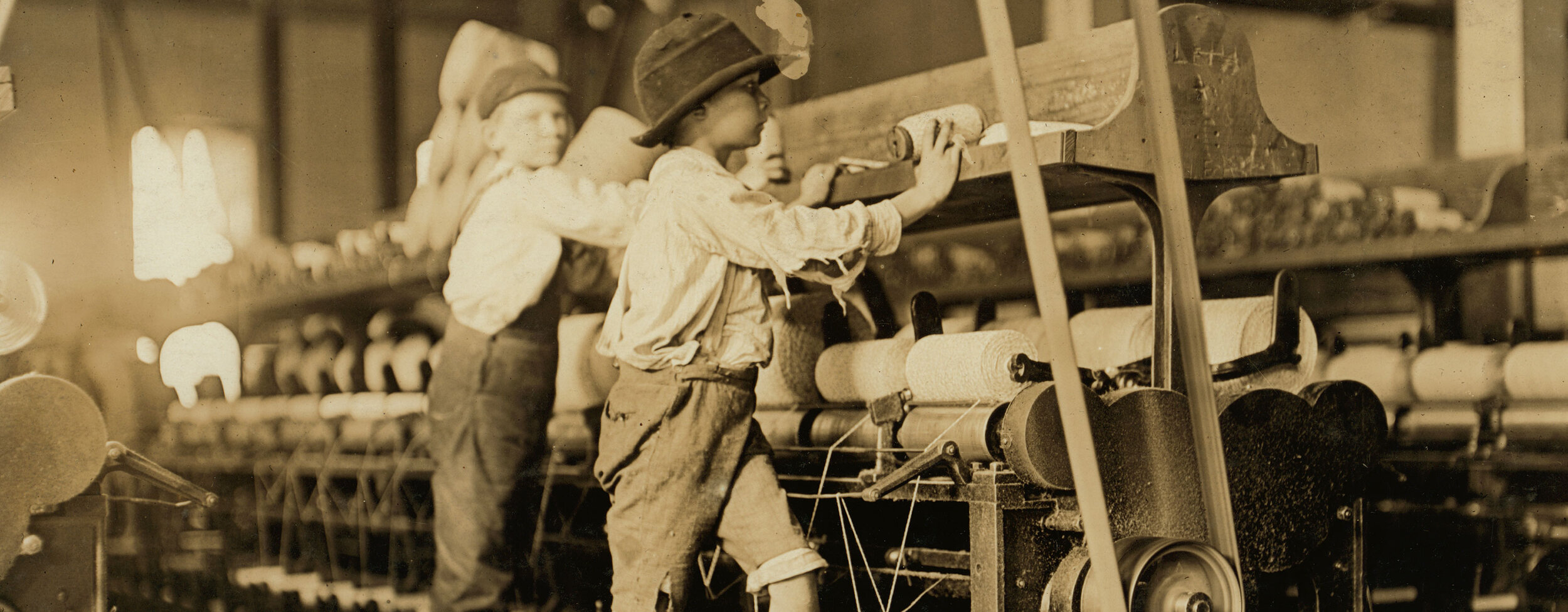
These conditions would continue for several decades all the while being combated by labour rights activists, and leading to the formation of one of the first unions in the United States in 1827 called the Mechanics’ Union of Trade Association in Philadelphia, with many more to follow.
Fast forward to 1960 in Canada, and you will find the first time that the word safety was introduced into legislation, and in 1970 the first Occupational Safety and Health Act was passed in the United States with the intention to guarantee safe working conditions for all workers.
Physical safety in workplaces is, for the most part, a high priority for most organizations, thanks to the hard work of union activists, and the corresponding proliferation of unions who collectively bargain for better working conditions.
While all unions share the desire to represent employees collectively, they differ enormously in size, political affiliation, structure, and focus. Some provide coverage for workers in a single enterprise, some are craft unions with members across a range of specialties such as plumbers or carpenters, and some cover workers engaged in specific kinds of work such as hospitality or within the non-profit sector.
That said, safety is not just about physical safety. Safety is also about emotional safety. And, this more fulsome definition of what occupational safety entails, which is recognized in law in many jurisdictions, is one of the reasons that there is a deep and pervasive need for unionization, even in organizations and industries you might not expect.
For example, unionization has gained traction in Silicon Valley with the certification of The Alphabet Workers Union when a group of Google engineers unionized. The technology company, Kickstarter unionized in 2020 with the primary reason for doing so to give workers more clout, and in 2020, Glitch, a software company also unionized.
In other words, unionizing is not necessarily only about physical safety. It is about employees feeling heard, empowered, feeling emotionally safe, feeling safe from discrimination and sexual harassment, and feeling like the organization they work for prioritizes fairness.
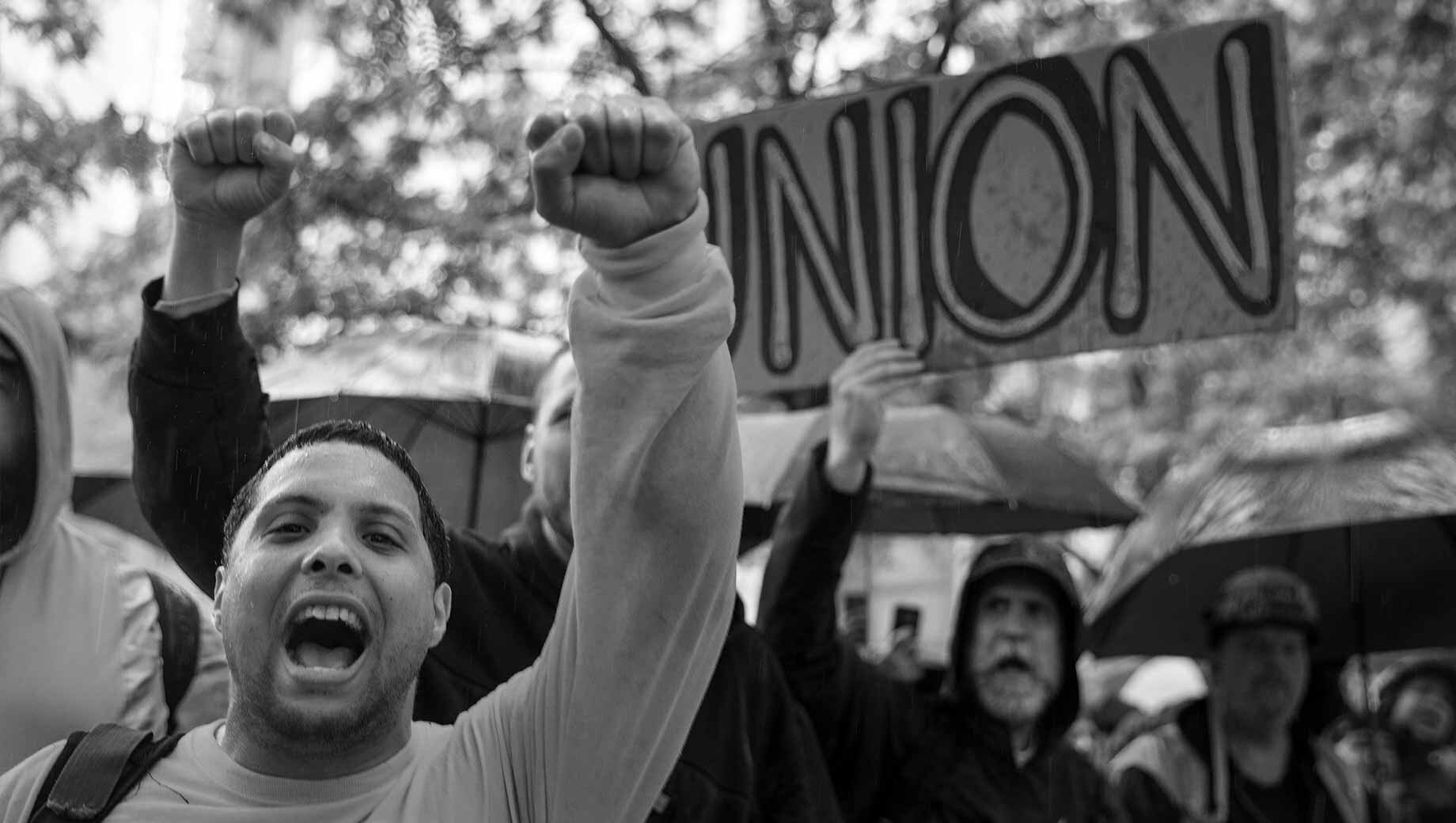
The attempt by the employees of ALDF to unionize is their right. Their legal right. While I have not spoken to any ALDF employees directly, I can only anticipate that there are some very good reasons they have chosen to unionize. They have voted. They want The Nonprofit Professional Employees Union (“Union”) to represent them. It is time for ALDF leadership to accept the fact that they have failed the employees thus far, and they must now welcome the Union with open arms. They must collectively bargain with the Union, and through that process, I hope that they learn how to take better care of their people.
The reality is that if employees in our Movement are not engaged, they simply cannot do their best work for animals. So, taking care of our people means that we are taking care of animals. It’s like being on a plane . . . if something is going wrong, you need to put your own oxygen mask on first before you can help those around you. ALDF employees need an oxygen mask so they can keep doing great work for animals.
And, as noted above, the situation at ALDF should be a wake-up call to all leaders in our Movement.
Here are a few questions for leaders, including Boards of Directors and Executive Directors, to ask themselves if they are wondering if their employees might be considering unionizing:
Does our organization:
have positive human resources practices?
consistently work in alignment with our mission, vision, and values?
train leaders on employee relations?
have clear, transparent, and consistently applied policies and procedures?
benchmark wages and benefits?
conduct employee surveys and act on the findings?
genuinely listen to employees?
have policies and processes for matters related to respectful workplaces?
have a commitment to diversity and inclusion?
is clear about what is expected from each employee?
engage in positive performance management practices?
provide opportunities for advancement and job enrichment?
have a culture of recognition?
ensure that workloads are fairly balanced?
truly and genuinely respect and encourage work/life balance?
If you don’t answer ‘yes’ to all of these questions, this might be a good time to reevaluate your human resources practices.
Unless and until the leadership in this Movement prioritizes the needs of vocational activists, then we should all be welcoming The Nonprofit Professional Employees Union with enthusiasm.
I want to help to empower you to be the best activist you can be. Please reach out with any questions and I’ll try to answer them in future blogs, anonymously of course!.
Always for the Animals,
Krista
Links:
ALDF Employees Seeking to Unionize: https://marcgunther.medium.com/workers-at-an-animal-protection-group-want-a-union-the-ceo-not-so-much-7912a00870c8
The Nonprofit Professional Employees Union: https://npeu.org/
ALDF and the Union: https://npeu.org/aldf
This blog series is provided for general information purposes only. It is not intended to provide legal advice or opinions of any kind. No one should act, or refrain from acting, based solely upon the materials provided on this website, any hypertext links or other general information without first seeking appropriate legal or other professional advice.
The intention of this blog is to promote the longevity and engagement level of the activist community within the Animal Advocacy Movement (AAM). The majority of the advice will be geared towards employees within the AAM in Canada and the United States, but may be applicable to other countries. All information provided assumes that the employee works within a non-unionized environment.

Krista is the Executive Director of For The Greater Good where she consults with animal protection organizations across North America on matters of organizational development and governance. In addition to holding five degrees and designations in human resources, including a master’s degree in organizational development and leadership, she is pursuing her doctorate focused on the employment experiences of animal rights activists in Canada and the United States. Krista first joined the Animal Advocacy Movement as the VP of Mercy For Animals in Canada where she led twelve undercover investigations into factory farms and slaughterhouses. Krista also served as the President of the Board for Happily Ever Esther Farm Sanctuary for over five years, also now serves on several other Boards including One Protest, The Rancher Advocacy Program, Egg-Truth, and Dairy-Truth. Krista is also a member of Womxn Funders in Animal Rights. Krista is a peer reviewer for the Journal of Critical Animal Studies - https://journalforcriticalanimalstudies.org/ Prior to joining the Movement, Krista founded a boutique employment and labour law firm in Toronto where she consulted to employers across Canada and the U.S. for a decade, and before that she spent fifteen years in human resources including as the Vice President of HR for one of the largest software companies in the world.
In conversation.
3 comments
Alene
Thank you for writing this!
Anyone who wants to express solidarity with ALDF staff trying to unionize can do so here: https://actionnetwork.org/letters/solidarity-with-aldf-united.
<3
ALDF Employee
I am an employee at ALDF. Just an employee. With respect, Krista, I don't think you have all the information needed to be making the assertions you've made in this article. The reality of what's going on at ALDF is not simply what you find in the union's twitter feed, their press releases, or their PR campaign. There's really a lot more to it than that.
1) "While I have not spoken to any ALDF employees directly, I can only anticipate that there are some very good reasons they have chosen to unionize."
Yes, there are some good reasons, mostly around a lack of communication from leadership. But there are also some bad ones. One organizer claims to want to "disrupt the power structure." Another told me that this was about dissatisfaction that the organization hasn’t taken a particular political stance publicly. Another supporter told me that this was exclusively about certain individuals in management that "nobody liked." None of those are appropriate reasons for a union. None have to do with the "emotional safety" that you speak about in this article.
ALDF has legitimate internal issues, as every organization does. But the constant publicly implications made by the union that there are major issues at the organization are simply false. Women make up the majority of management and the overwhelming majority of staff. We have both policies and procedures in place to prevent and report discrimination, harassment, bullying, and retaliation. The organization has done training with and continues to engage a DEI consultant. We have externally benchmarked salaries, amazing health insurance (gold plan standard, fully paid for), 192 hrs/yr PTO (that's over 4 weeks), 2 weeks emergency paid sick leave, 4 weeks paid sabbatical for staff who have been there over 5 years, paid family, disability, and bereavement leave including for companion animals, 5% 401k matching, the possibility for alternative work schedule (four ten hour days), etc.
Yes, there are things that need to be improved. That's true at any organization. But the people organizing the union have been disingenuous by 1) implying there are certain issues at the organization that there aren't, and 2) implying that all staff support the union. We don't.
2) "They have voted."
There wasn't a vote. It was a "card check." As I've detailed before, here's how that played out:
Over the course of several weeks, staff members were called privately by members of the organizing committee. We were asked not to talk about it with anyone else. I was told one reason for why a union was being formed. I learned later that other people were told different reasons. I was asked, on the spot, by someone I work with, whether I supported a union. When the "card check" process began, the point at which people were supposed to formally express support for a union, subsequent follow up texts and emails were sent to people by the organizers. Multiple people reported feeling harassed or bullied by the organizers to sign a card. Does that process sound democratic to you? At a certain point, ALDF United announced to the organization that the card check was done, a union was formed, and gave a deadline of two weeks for recognition. Essentially, "We're done, you have a union."
The union hasn't told us how many staff were asked to do the card check nor what they define as a "supermajority." Only people the union deemed eligible were even asked to sign a card. There is a significant portion of staff who do not support the union. A large number of us at ALDF do not support the relentlessly negative and biased perspective that the union regularly bombards us with. We don't support the union or the way the organizers have pursued it. Absolutely everything that anyone had said that isn't in support of the union has been characterized as "union-busting" and is interpreted in the most negative way possible and that simply isn't the truth of the matter.
Krista Valerie Hiddema
Dear ALDF Employee,
Thank you so much for adding your voice to this discussion. I am most grateful to you for writing.
My intent in writing this blog was to: i) consider the history of the labour relations movement, ii) acknowledge that safety at work includes more than physical safety, iii) encourage and perhaps even inspire leaders in our Movement to genuinely listen to their employees, and iv) highlight some of the important human resources practices that are necessary to create and sustain engaged workplaces. The latter of which, even in the wake of ARMeToo, still seems to be lacking.
That said, I am not at all surprised that there is more “going on at ALDF” that might be apparent, and frankly, I would be surprised if there wasn’t more going on. There always is in these circumstances, and that is precisely why I didn’t speak to anyone before I wrote it – I didn’t want the blog to be a ‘they said’ / ‘they said’ account. I wanted instead to keep the blog general, and for it to serve as a wake-up call for leaders in our Movement to ensure that they are engaging with their employees in a deep and meaningful way because when they don’t, union organizing (regardless of the outcome) is precisely what can happen. And, of course, when any form of significant conflict occurs in a workplace it can be destructive, time-consuming, it can erode relationships, it can be all-encompassing, and it can take precious energy away from our primary mission – working for animals. Something that I think we can all agree on is not a good thing.
As it relates to ALDF specifically, I am glad to hear that you feel that there are no issues with emotional safety. I would share, however, that I did receive private emails after I posted the blow from others at ALDF indicating that there were. I am also glad to hear about how generous your pay and benefits seem to be – frankly I feel that most people in our Movement are underpaid, so this really is good news.
In closing, please know that my intent, again, was not to undergo an analysis of what did and did not occur. Instead, it was to highlight that the employees who do the very hard work of seeking to protect animals every single day of their lives need to be treated with the deep respect that they deserve and that the organizations they work for need to center the needs of those employees, or risk a workforce that is burned out, and not able to do their best work for animals.
Please see my blog about burnout in our Movement here: https://faunalytics.org/identifying-and-mitigating-burnout-in-animal-advocacy/.
Always for the Animals,
Krista